Revival...

Just Like A Phoenix.. I Rise from The Ashes of Failure...

TheSage's English Dictionary and Thesaurus - A Good Pal For You...

Uh Uh.. Banyak Software yang berguna bagi semua Owg Especially budak2 Skola... I suggest Software ini... sebab i gunakan software ini untuk MUET.. n semua Assignment i... dan merupakan Software Yang dapat membantu korang dalam memperbaiki ENGLISH LINGUAL PROFICIENCY korang...

Internet Download Manager v6.04 Build 2.rar - Working For Firefox 4.0

Hmmm... Firefox 4.0 mmg Best.. Tetapi it incompatible ngan IDM V5.00 ke bawah.. n Susah untuk Cari IDM V6.00++ yang adew Crack.. So Here it Is...

PrimoPDF - Rakan Baik Untuk Anda..

PrimoPDF.. merupakan PDF converter yang terbaik pernah i Guna.. Seriously.. it Memang berguna... untuk convert fail Words, Excel or mcm2 lagi untuk kegunaan korang.. ia mudah n senang... Trust me...

Quinoa - Your Solution For Slimness...

Quinoa adalah sejenis Bijirin dan makanan ruji kaum kuno Inca di Amerika Selatan. Ia adalah sejenis biji jenis chenopodium dari pokok quinoa. Ia dikategorikan sebagai pseudo bijirin kerana pokoknya bukan dari jenis lalang seperti padi, gandum atau barli tapi dari jenis tumbuhan yang menyerupai pokok bayam.

Showing posts with label Mother Earth. Show all posts

Tuesday, June 14, 2011

Marimos : Little Earth Buddy...

Courtesy of Andy0625 From Lowyat.net

Cladophora Aegagropila Marimo Moss Ball

Scientific name: Cladophora aegagropila
Common names: Moss ball, Japanese moss ball, Marimo ball
Family: Cladophorales
Maximum size: 4 to 12-inch diameter.
Light needed: Moderate to High (2-3 watts/gallon)
Water conditions: pH 6.8-7.5, 72-82° F, KH 3-8
Hardiness: Easy as long as it has good light
Growth rate: Slow
Propagation: Division of the ball
Distribution: Northern hemisphere

Additional Information

Here is an excellent and attractive addition to any freshwater tank. The Marimo ball, also known as Moss ball or Japanese moss ball is actually a filamentous green algae (Chlorophyta) found in a number of lakes in the northern hemisphere: Japan, United Kingdom, Russia, Iceland and Northern Europe.
In its natural habitat, the Marino ball is moved around by undercurrents and sink or rise in order to receive plenty of light to carry out photosynthesis.

It ranks among the strangest plant on Earth and has been granted the status of National Treasure in Japan. In Iceland it is believed that taking good care of the plant will “make your wishes come true”.

Domestic Marimo can be grown in tap water at room temperature and be given small amounts of liquid fertilizer with half water changes on a weekly basis. The amount of light it needs varies from source to source. Some places say this plant needs high light while others say it requires little more than ambient light.

They "reproduce" when a bump forms on a Marimo and it falls off and gets pushed around until it forms the round shape. If you don't want to wait for that you can tear it apart. You can clean your Marimo by dipping it in water and gently squeezing like you would a dirty sponge.

Marimos balls develop their characteristically round shape because water currents push them around the bottom of lake beds. This algae is free floating so you don’t need a substrat in your tank. As it is photosynthetic, it will float or sink in response to light. The oxygen they produce makes them lighter so they rise to the top. To make them sink again, just squeeze the air out.

Marimos are mistakenly referred to as “moss balls” but they’re really a species of filamentous algae. If you’re looking for a fun “plant” to add to your indoor garden collection I highly recommend buying and growing a Marimo. They’re interesting little creatures that may not do much at first glance, but once you’ve had one around for a while you’ll see that it is very much a living thing. Sometimes Marimos floats and even in a cramped aquarium its moves around, either inching towards the light from the windows during cloudy days, or away from the light on very bright days.

Some aquarist have created quite unique landscapes using Marimos balls attached on wood or as a substrate cover. An easy way to do this is to open them up with your fingers and attach them to whatever you want with fishing line. They can be attached to small rocks to cover the substrate or they can be attached to roots. Just use your imagination.

Here some of their Fantastic Picture and Videos...

Courtesy of Andy0625 From Lowyat.net  

Three Awesome Pictures Courtesy of Mevoxede From Lowyat.net  

Awesome Video Courtesy of Mevoxede From Lowyat.net

Two Awesome Pictures Courtesy of alex_cyw1985 From Lowyat.net  

Awesome Picture Courtesy of  xecton From Lowyat.net   

Here a good place to start your Hobby...

And Place For You To Buy These Awesome Marimos...

MARIMOS FOR SALES


.....................................................................................................................................


"Green is the prime color of the world, and that from which its loveliness arises. "
 
Pedro Calderon de la Barca.

Monday, June 13, 2011

How To Go Green.. It Simple As ABC...


How can you go green at home? Here are 10 simple steps to green up your life and change the planet...

1. Buy Only What You Need

  • Plain and simple—don’t over purchase.
  • However, when buying items that you use daily or in large quantities, consider buying in bulk. You will save money and packaging. Consider splitting bulk purchases with neighbors or friends to get that savings but not the full quantity of the purchase. Sometimes we can’t always use 50 rolls of toilet paper!

2. Recycle, Recycle, Recycle!

  • Remodeling? Don’t forget to look for recycling and reuse programs for your household items—windows, doors, tile, etc. New technology has enabled some companies to recycle old porcelain toilets and tubs into beautiful counter tops and tile.
  • Don’t forget the last step in the recycling loop—buy recycled! In order for recycling to be sustainable, we need to purchase recycled-content materials! Look for and purchase post-consumer recycled content packaging and products whenever possible.

3. Change a Light, Change the World

  • When your incandescent light bulbs stop working, replace them with the new, energy efficient compact fluorescent light bulbs (CFLs). According to the U.S. Environmental Protection Agency (EPA) CFLs use 2/3 less energy than traditional incandescent light bulbs and last 10 times longer. Making this switch will save you money and energy.
  • Some incandescent light bulbs may contain mercury, so remember to dispose of both properly at your local household hazardous waste facility.
  • Take the U.S. EPA’s ENERGY STAR pledge to save energy and help reduce the risks of global climate change by replacing at least one light in your home with an ENERGY STAR qualified one.

4. Bag It Up the Green Way

  • Plastic bags are getting the “thumbs down” in several communities around the country because of litter problems. When going to the store, consider bagging your own groceries in cloth, reusable bags. Many stores sell reusable bags and charge to provide plastic grocery bags.
  • When walking your dog and cleaning up after then, use a biodegradable bag rather than a plastic bag.
  • If you decide to use plastic bags, remember to recycle them. Thousands of locations are available across the country.

5. Green Your Gadgets

Electronics become “outdated” so much more quickly than 10 or 20 years ago. To insure you are responsible with your gadgets, consider doing the following:
  • Resist the urge to upgrade every time a “newer” or “cooler” gadget comes out. Reduce at the source—you save money and the time (and frustration) to learn how to operate and program the new gadget.
  • Donate working electronics to charities or school programs resell or refurbish them.
  • Completely broken? Recycle! Electronics are the new “hot” item being recycled across the country.
  • Refill or recycle your inkjet or toner cartridges.
  • Close the recycling loop and buy recycled, post-consumer content paper for your printer. Most local office supply stores, such as Staples, offer a growing selection of environmentally friendly papers.
  • Keep in mind even computer game equipment and iPods now have reuse and recycling programs available.

6. Make Every Drop Count

Even though 70 percent of the world is covered by water, we should conserve all that we can. Here are some quick tips to save that last drop:
  • Turn off the water faucet when brushing your teeth.
  • Use your dishwasher and washing machine only when they are full. Try to avoid small, partial loads.
  • Compost food scraps instead of using your garbage disposal. You’ll save gallons of water every time and have a great soil amendment for your garden.
  • Clean your driveway or sidewalk with a broom instead of hosing it down with water. You’ll save at least 80 gallons of water every time.
  • Don’t use running water to thaw food.

7. Turn Up the Savings

  • A few degrees can make all the difference in your energy savings and your wallet. In the summer raise your thermostat two degrees. In the winter lower your thermostat two degrees. You probably won’t notice the difference, at least until your utility bill arrives!
  • Use a ceiling fan to cool off a room or house. It consumes as little energy as a 60-watt bulb, which is about 98 percent less energy than most central air conditioners.
  • Install a programmable thermostat to better regulate the temperature in your house through the day and night. Remember to recycle your old, mercury containing thermostats.
  • When replacing an appliance, be sure to look for one that is more energy efficient. Always look for the ENERGY STAR symbol and compare water and energy usage to ensure you get the best product and environmental savings to suit your needs.

8. Clear the Air

  • Carpool, ride the bus, use public transportation or bike to work
  • Telecommute. Employee productivity will increase.
  • Trip chain! Save fuel and time by planning ahead and consolidating trips into one trip. Also, vow to only go to certain, far away stores less frequently.
  • Keep your tires inflated to the appropriate air pressure level. This will extend the life of your tires and give you better gas mileage.
  • Drive the speed limit.
  • Service your car on a regular basis per the manufacturer guidelines.
  • In the market for a new car? Consider one of the new hybrid or fuel efficient vehicles.

9. Save A Tree

  • Save paper, time and postage, and pay your bills online.
  • As the price of paper cards and postage increases, consider e-mailing e-cards.
  • When printing documents, print on both sides of paper. You can cut your paper consumption almost in half.
  • E-mail documents and information instead of printing and mailing them.
  • Save documents on your computer or on a disk instead of in a print copy in your filing cabinet. You’ll free up lots of space.

10. Home Sweet Home

  • Clotheslines are making a comeback. Dry your clothes on the line instead of in the dryer. They will smell better, and you will save money.
  • Use cloth napkins instead of paper napkins. They can be used over and over again and thrown in with your weekly load of towels.
  • Make your own less toxic cleaning alternatives using baking soda, soap and vinegar.
  • When repainting a room, be sure to look for paint that is low VOC (volatile organic compounds). 
  •  Several manufacturers now offer VOC paints and they don’t leave that paint fume smell.
  • Open the doors and windows to let the fresh air in! Indoor air quality is often times worse than the air outside. Open doors and windows daily to circulate fresh air in and germs and smells out. 

Like A Wise Man Said.. A Small Change Would Change a Whole World To Become A Better Place...


    Wednesday, June 8, 2011

    New species discovered in Madagascar

    Just one word to described it.. Beautiful... The Mother Give us A Lush Forest... Not To Destroy it But To Discovers It WONDER...

    Recently Scientist discovers and have uncovered a parade of 615 new species — from the colorful and cuddly to the downright bizarre in Madagascar.

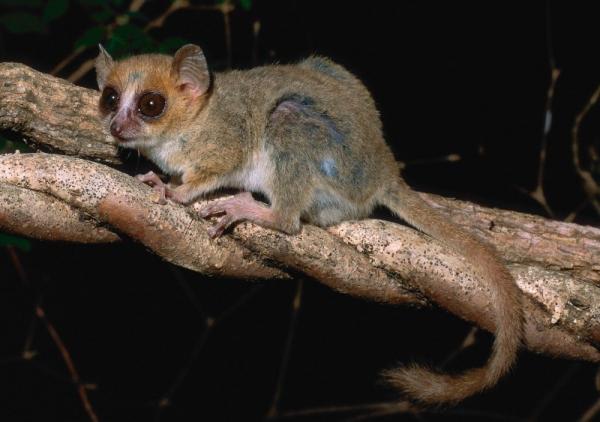
    Berthe’s Mouse Lemur
    Image Credit: Harald Schuetz, WWF Madagascar

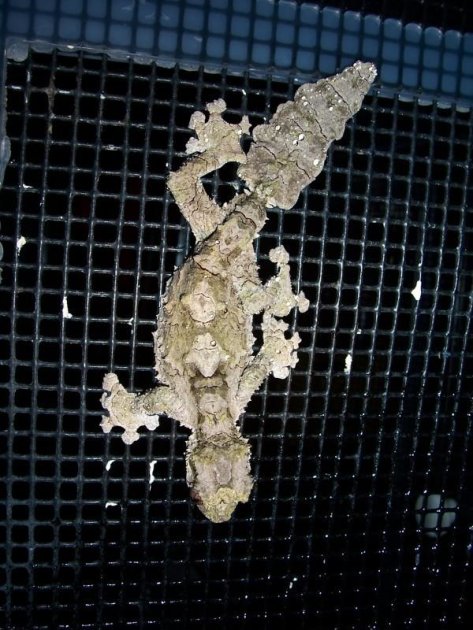
    From the world's smallest primate, Berthe’s mouse lemur, a creature teeny enough to perch inside a shot glass at 3.5 inches tall and weighing in at just an ounce, to a lizard that wears a tree-bark disguise are among the standouts of the hundreds of species to debut, all compiled in a new report from the conservation organization WWF. 

    "All the species are so special, and many are unique to Madagascar," Ratsifandrihamanana, WWF Madagascar's conservation director, told OurAmazingPlanet. "They don't exist anywhere else in the world."

    Treasure trove of species 

    The island's treasure trove of unique species stems from its relative isolation. Madagascar has been separated from Africa and the Indian subcontinent for the last 80 million to 100 million years, allowing its plant and animal residents to evolve into fantastical forms. About 70 percent of its species are unseen anywhere else on the planet.

    In total over the last 12 years, researchers have identified 17 fish, 41 mammals, 61 reptiles, 69 amphibians, 42 invertebrates and 385 plants new to science since 1999. And the pace of discovery shows no signs of slowing.

    In fact, because of growing scientific interest in Madagascar's denizens, and thanks to technological advances that allow for faster identification, such as DNA coding, Ratsifandrihamanana said the onslaught of new species described could continue or even increase.
    But the news isn't all good.


    "The sad part is that there could be many species that will disappear before they are discovered," she said.
    Many of the creatures discovered are already endangered and are losing habitat quickly.

    Disappearing forests 

    Madagascar's forests, home to many of its unique species, were cleared at a rate of about 2 percent a year from 1950 to 1990. According to WWF, the island has lost 90 percent of its original forest cover.
    That's because humans depend on the island's forests, too. About 80 percent of the Malagasy population uses wood as its main source of energy.
    In addition, large swaths of forest are cleared for subsistence farming.

    Although Ratsifandrihamanana said the rate of deforestation was cut in half from 1990 to 2005, the last year for which figures are available, she said it remains a serious problem.

    "We're really trying to empower local communities so they are better managers of the resources, because they are the ones who make the daily decisions for how they will use the forest," Ratsifandrihamanana said, adding that one major piece of the puzzle is improving the population's economic situation.

    The country is one of the poorest on the planet, and a 2009 coup further complicated the nation's already bleak financial situation. Since the political upheaval, international funding for the country's environmental program was cut off, and there's been an increase in trafficking in exotic animals and prized, rare trees.
    However, despite its troubles, Ratsifandrihamanana said WWF and other international organizations continue conservation efforts on a local level in Madagascar.

    "It's an extraordinary place," Ratsifandrihamanana said. "We need a lot of support now for the environment."

    Here is some of the WONDERFUL MADAGASCAR ANIMALS Pictures....

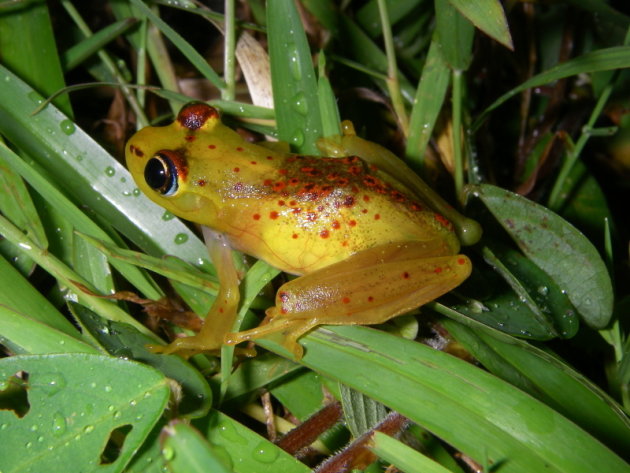
     Boophis Lilianae Tree frog
    Image Credit: Axel Strauss/WWF Madagascar

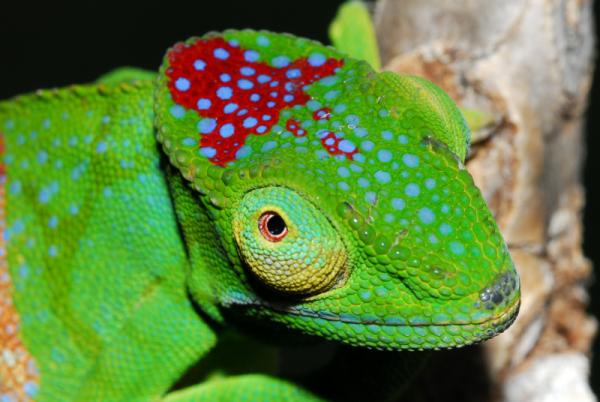
     Furcifer timoni Colorful chameleon
    Image Credit:Jöm Köhler/WWF Madagascar

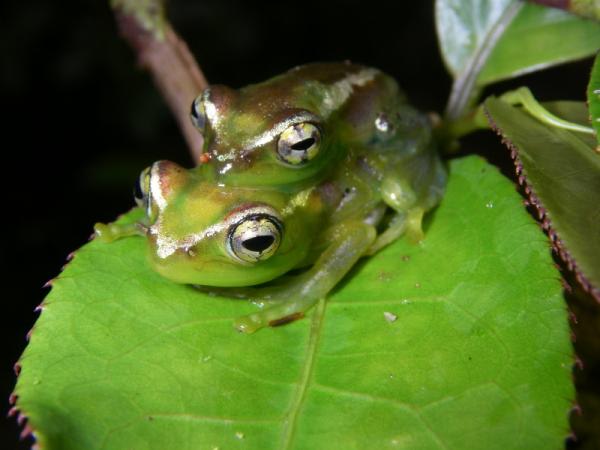
     Boophis bottae Transparent Tree Frog
    Image Credit: Axel Strauss, WWF Madagascar

     The amazing cork bark leaf-tailed gecko (Uroplatus pietschmanni)
    Image Credit: Ben Smith/WWF Madagascar

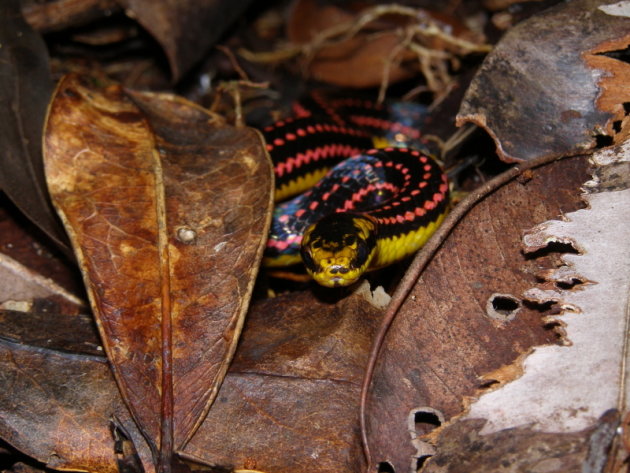
     The bright pink snake (Liophidium pattoni).
    Image Credit: Ben Smith/WWF Madagascar


    "Earth and sky, woods and fields, lakes and rivers, the mountain and the sea, are excellent schoolmasters, and teach some of us more than we can ever learn from books. "
     
    John Lubbock.